If your loved one has started turning down the foods they used to love, you know exactly what that moment feels like. You are not just cooking. You are trying to hold onto a person through the things that used to comfort them.
And one by one, those things stop working.
The foods they loved can start to taste wrong
Here is something no one warned me about. Dementia does not only take memory. It changes taste and smell. Foods a person has enjoyed for eighty years can suddenly taste flat, or strange, or wrong. Appetite comes and goes. Textures that were fine last year become hard to tolerate now.
So when your mom refuses the soup she has made a hundred times herself, she is not being difficult. She is not rejecting you or your cooking. Her body and her brain are changing, and food is one more place it shows up.
The sweet tooth usually hangs on the longest. That is not a lack of willpower either. It is just how the disease tends to go.
What actually works at our house right now
I have stopped trying to serve balanced, proper meals to someone who cannot eat that way anymore. Now I go with what she will actually eat, and I keep it simple and repeatable.
Our real menu these days
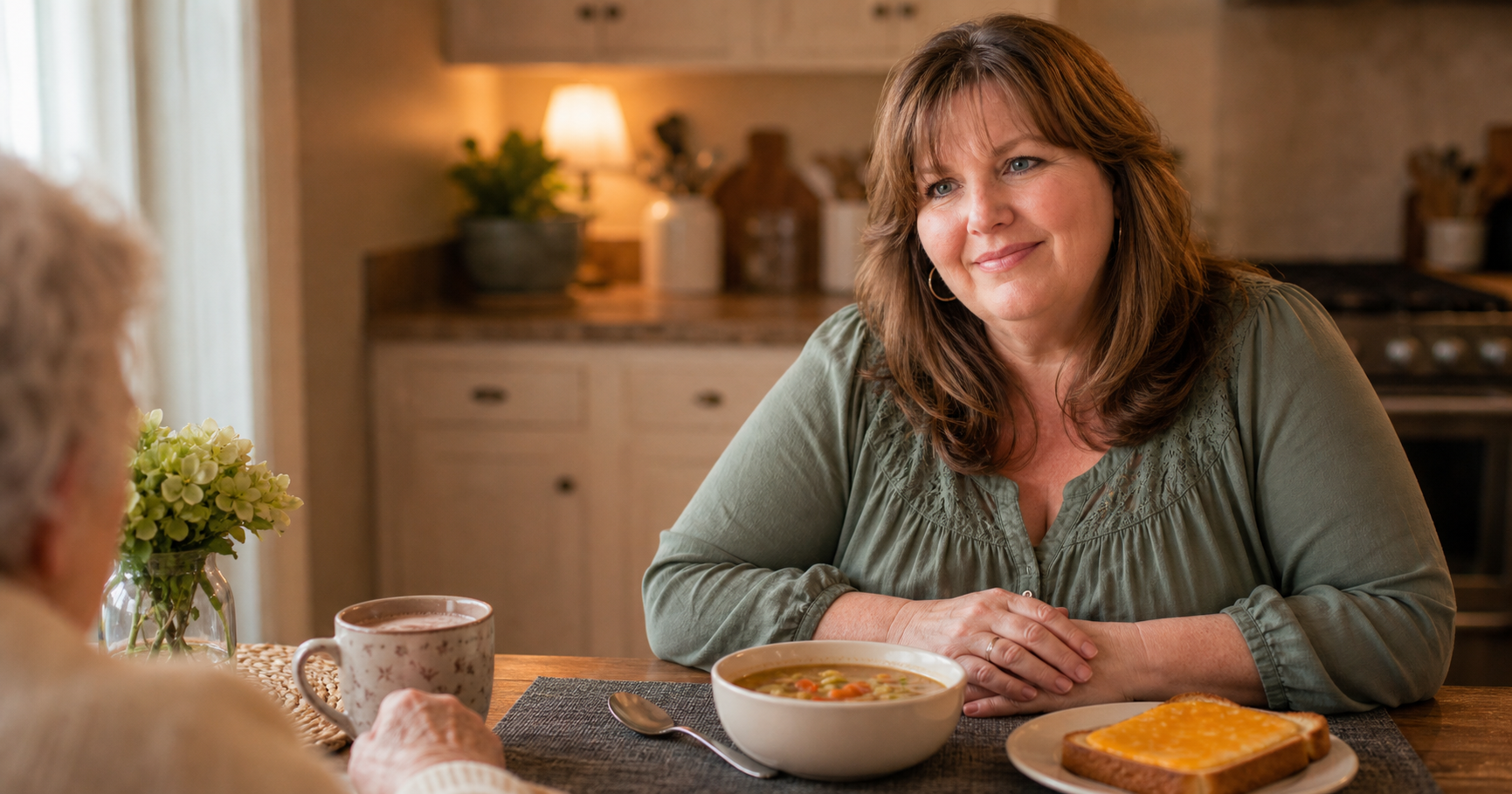
Mornings are the easiest. Cheese toast and bacon almost always work. Lunch is hit or miss, a ham sandwich, or leftovers, or sometimes nothing much. For supper I am feeding the whole family, so we lean on chicken or beef, since we are not big on seafood. She loves potatoes, but I do not cook them often, because both she and my aunt are diabetic and we watch the starch.
One little trick has helped more than I expected. She likes hot chocolate with her breakfast, so I stir a scoop of protein powder into it. So far she has not noticed a thing, except that it comes out a little more foamy. I just tell her I was trying to make it fancy. On the mornings she barely touches her food, at least I know she got a little protein in.
The thing I had to learn is this. A few bites of something she will actually eat is a win. A full, balanced plate she pushes away is not. I stopped measuring success by what I think she should eat, and started measuring it by what she does eat.
If nothing sounds good, these are the things I reach for first.
What to try when nothing sounds good
Small portions instead of a full plate. Familiar comfort foods over anything new. Soft, warm, easy to chew. Finger foods when a fork feels like too much. And within reason, following the sweet tooth, because a few bites eaten beats a healthy plate refused.
“So whether you eat or drink or whatever you do, do it all for the glory of God.”
1 Corinthians 10:31I hold onto that verse in the kitchen more than anywhere else. Making cheese toast at six in the morning does not feel like much. It feels small and tiring. But feeding the people God gave me to care for still matters to Him, even when it is just toast.
The night eating, and the cabinet I never thought I would lock
Here is the part that is harder to admit. My mom is up and down all night, and she is constantly looking for something to eat. Mostly sweets. She is diabetic, so I cannot let her graze on sugar until morning.
So I bought a locking cabinet for the pantry. My husband and I put it together in a couple of hours, and I like that it is on wheels, so I can move it around when I need to. The sodas we keep for the occasional pizza or hamburger night have to stay locked up too, or they will be gone by sunrise.
I will be honest with you. Locking food away from your own mother feels terrible the first time you do it. It feels like you have become the bad guy in your own home.
But it is not punishment. It is protection. Keeping her blood sugar from crashing or spiking in the middle of the night is not being unkind. It is one of the ways I keep her safe when she cannot keep herself safe. If your loved one has diabetes or a medical reason to limit certain foods, please talk to their doctor about what is right for them. For us, the lock was an act of love wearing a hard disguise.
Letting go of perfect, choosing comfort
Somewhere in the last three years I had to put down a heavy idea I did not know I was carrying. The idea that if I just tried hard enough, cooked well enough, cared carefully enough, I could keep them healthy and get them back to how they used to be.
I cannot. I cannot heal them. What I can do is make them comfortable and keep them safe and let them feel loved in their own home.
You are not failing because your loved one will not eat what you cook. You are feeding a body and a brain that are changing. A few bites they will take is a win. Comfort matters more than the perfect plate now. And feeding them is love, even when it is just cheese toast and bacon.
Grace for the one doing the feeding
This is trial and error, and it is going to stay that way. You will cook things that get pushed away. You will throw food out. You will feel like you are failing at a job that used to be simple. You are not failing. The job changed. You are keeping up with a moving target, every single day.
The one thing that saves me is meal prep. I keep portions ready in meal prep containers in the freezer, so when she turns down what I made, I can pull something else out and have it warm in a couple of minutes. It takes the panic out of the moment. I wrote more about that and the other small things that lighten the load in my post on four small things that made my caregiving days easier.
“Cast all your anxiety on him because he cares for you.”
1 Peter 5:7I worry about whether she is eating enough. I worry about her sugar, her weight, the days she barely touches anything. If you carry that same worry, I am not going to tell you to stop, because I cannot stop either. But I am learning to hand it back to God at the end of the day, when I have done what I can do and the rest is not mine to fix.
You were called to feed them. Some days that looks like a balanced meal. Most days lately, it looks like bacon at dawn and a bowl of something they will actually eat. That still counts. That is still love, and you are doing it faithfully.
What is the one food your loved one will still eat, no matter what? Share it in the comments. Someone reading this tonight is out of ideas and would be so grateful for yours.
Leave a comment below. This is a safe place, and we are all learning this as we go.
Amy
Called to Caregiving
A Free Gift for Tired Caregivers
Get my free Caregiver Emergency Information Sheet, the one page that speaks for your loved one when you cannot. Print it, keep it by the door, and take one thing off your plate.
Send me the free sheet